The organic nutrient for lactic acid bacteria.
Purpose
O. oeni has specific nutritional needs: it cannot use ammonium and depends on peptides and amino acids. After alcoholic fermentation, important nutrients are often depleted, making sequential MLF.
Maxaferm® ML Force, based on autolysed non-Saccharomyces (Cyberlindnera jadiniiyeast), is rich in bioavailable peptides, minerals and vitamins. It also contains yeast hulls of S. cerevisiae, which adsorb fatty acids that inhibit bacteria and thus support successful MLF.
Science and technology
Maxaferm ML Force is an essential nutrient for successful MLF, especially under difficult conditions.
At 18 °C, MLF of a Nebbiolo wine (figure 1) does not start on its own, even in the presence of a classic yeast autolysate of S. cerevisiae. Maxaferm ML Force allows MLF to start and malic acid to be fully consumed regardless of temperature.
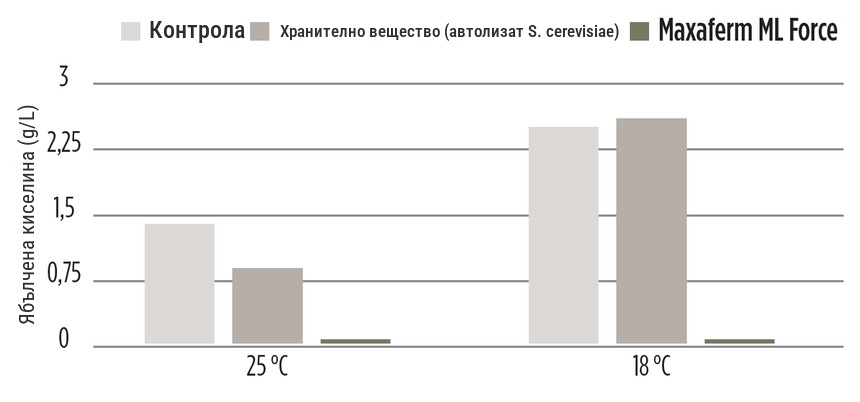
Maxaferm ML Force ensures consistent, fast and complete fermentation kinetics.
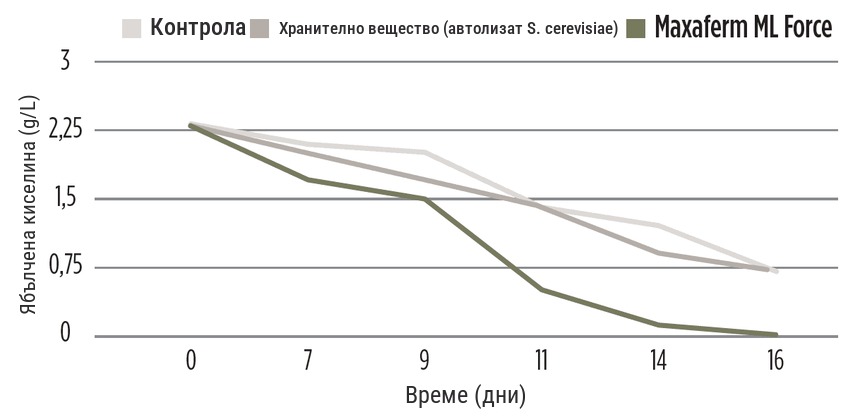
With Maxaferm ML Force, MLF at 18 °C (figure 2) is fast (16 days) and is the only one to achieve complete malic acid consumption thanks to sufficient nutrition.
Properties
Thanks to its optimised composition, Maxaferm ML Force:
- ensures fast and complete MLF;
- avoids excessive warming of wines to start MLF;
- contributes to wines free of aromatic faults.
Easy to use. Oenobrands products are made from yeast derivatives selected and dried using exclusive technology. This ensures rapid dispersion without lumps.
Composition
Maxaferm ML Force contains:
- 80% autolysate of non-Saccharomyces (Cyberlindnera jadiniiyeast), rich in amino acids, peptides, vitamins and minerals;
- 20% yeast hulls of Saccharomyces cerevisiae.
Dosage
20 g/hL. Maxaferm ML Force is added at inoculation with lactic acid bacteria.
For sluggish MLF: Maxaferm ML Force is added at 30 g/hL.
For stuck MLF: acclimatise a robust strain before re-inoculation and add Maxaferm ML Force at 30 g/hL.
Use
Suspend Maxaferm ML Force in 10 times its volume of water before adding.
Packaging and storage
Pack size: 1 kg (hermetically sealed multi-layer laminated bags). Store in a cool, dry place (5–15 °C).
Need a nutrition plan for your yeast or bacteria? Get in touch.